

Building a business website can feel overwhelming for many New Zealand small business owners, especially tradies and service providers who excel at their craft but lack web development experience. You need a site that attracts local customers, displays your services clearly, and builds trust without breaking the bank. The good news is that creating an effective, professionally presented website tailored to New Zealand audiences is more achievable than ever in 2026. This guide walks you through the practical steps to build a website that genuinely works for your business, from initial planning through to launch and beyond.
Table of Contents
- Preparing To Build Your Business Website
- Step-By-Step Guide To Building Your Website
- Optimising Your Website For New Zealand Customers
- Common Mistakes To Avoid And Verifying Your Website’s Success
- Build Your Professional Website With Expert Help
- Frequently Asked Questions
Key takeaways
| Point | Details |
|---|---|
| Choose NZ-based builders | Local website platforms offer NZ$ pricing, better support, and faster hosting for your target audience. |
| Plan before building | Define your business goals, target audience, and essential features before selecting a platform or design. |
| Optimise for local search | Use location signals and local keywords to rank higher in New Zealand search results and attract nearby customers. |
| Test and update regularly | Verify functionality across devices and keep content fresh to maintain trust and search visibility. |
| Avoid common mistakes | Mobile responsiveness, clear navigation, and fast loading speeds are non-negotiable for customer retention. |
Preparing to build your business website
Before diving into website builders and design choices, you need solid groundwork. Clarifying your website’s purpose guides every decision you’ll make, from layout to content. Ask yourself what you want visitors to do: book a service, request a quote, or simply learn about your offerings. Understanding your goals prevents costly redesigns later.
Knowing your audience is equally crucial. New Zealand tradies and service providers typically serve local communities with specific needs. Your website should speak directly to homeowners or businesses in your region, addressing their concerns and demonstrating your local expertise. Consider what questions your customers ask most frequently and how your site can answer them immediately.
Choosing a NZ-based builder offers distinct advantages. For NZ small businesses, especially tradies and service providers, a website builder with local support and NZ$ pricing is crucial for cost-effectiveness and ease of management. You’ll avoid currency conversion fees, access support during your working hours, and benefit from hosting infrastructure optimised for New Zealand internet connections.
When selecting your platform, prioritise features that matter to your business model. Service businesses need straightforward booking systems, clear contact forms, and galleries showcasing completed work. Consider whether you’ll need features like rural delivery detection for product businesses or address verification for service areas. These essential website features for NZ service businesses can differentiate you from competitors.
Pro Tip: Create a simple spreadsheet listing your must-have features, nice-to-have additions, and deal-breakers before researching platforms. This clarity prevents getting swayed by flashy features you’ll never use.
Here’s a comparison of essential website features for different NZ small business types:
| Business Type | Essential Features | Priority Level |
|---|---|---|
| Tradies | Photo galleries, booking forms, service area maps, testimonials | High |
| Service providers | Contact forms, pricing tables, FAQ sections, blog for expertise | High |
| Retail | Product catalogues, shopping cart, payment integration, inventory | Critical |
| Consultants | Case studies, credentials, scheduling system, resource downloads | Medium |
Step-by-step guide to building your website
Building your website becomes straightforward when you follow a logical sequence. Here’s exactly how to move from concept to launch.
-
Select your website builder. Research platforms that cater specifically to New Zealand businesses. Local website builders offer advantages for NZ businesses, including NZ$ pricing, uptime reliability, and local support. Compare pricing structures, template quality, and whether they include hosting in their packages.
-
Register your domain name. Choose a domain that reflects your business name and location when possible. Including your city or region helps with local search rankings. Keep it short, memorable, and easy to spell. Most builders offer domain registration, but you can also use separate registrars if you prefer.
-
Set up NZ-based hosting. Even if your builder includes hosting, verify where servers are located. New Zealand or Australian servers deliver faster load times for your local audience. Speed matters enormously for user experience and search rankings.
-
Choose and customise your template. Select a design that suits your industry and feels professional without being cluttered. Customise colours to match your branding, but prioritise readability over aesthetics. Your grandmother should be able to read your text without squinting.
-
Create your core pages. Start with homepage, about, services, and contact pages. Each page should have a clear purpose and guide visitors toward taking action. Write in plain language, avoiding jargon that confuses potential customers.
-
Add NZ-specific features. Integrate payment options New Zealanders actually use, display prices in NZ dollars, and include your physical location if relevant. Make your phone number clickable for mobile users. These top website features NZ small businesses need show you’re genuinely local.
-
Test thoroughly before launch. Check every link, form, and page on desktop, tablet, and mobile devices. Ask friends or family to navigate your site and note any confusion. Fix issues before going live.
-
Launch and announce. Once everything works smoothly, make your site public. Share it on social media, add it to your email signature, and update your Google Business Profile with the new URL.
Pro Tip: The biggest mistake new website owners make is neglecting mobile optimisation. Over 60% of New Zealand web traffic comes from mobile devices. If your site looks terrible on phones, you’re losing more than half your potential customers before they even read your first sentence.
Optimising your website for New Zealand customers
Launching your website is just the beginning. Optimisation ensures local customers actually find you and choose your services over competitors.

Local search engine optimisation starts with clear location signals. A clear location signal improves your specialty trade contractor’s competitiveness in local search engine rankings in New Zealand. Include your city, region, and service areas throughout your content naturally. Don’t stuff keywords awkwardly, but mention locations where they make sense contextually.
Website speed directly impacts whether visitors stay or leave. New Zealand internet speeds have improved dramatically, but slow websites still frustrate users. Compress images before uploading, limit plugins or add-ons, and use caching if your platform supports it. Test your site speed regularly using free tools and address any slowdowns immediately.
Regular content updates signal to search engines that your business is active and relevant. Add new project photos, update service descriptions seasonally, or publish helpful blog posts addressing common customer questions. You don’t need daily updates, but quarterly refreshes keep your site feeling current.
Conversion optimisation turns visitors into customers. Every page should guide users toward a clear next step, whether that’s calling you, filling out a form, or booking a consultation. Use prominent, contrasting buttons for calls to action. Make contact information visible on every page. Remove any obstacles between interest and action.
Here’s how different optimisation tactics impact NZ small business websites:
| Optimisation Tactic | Impact on Traffic | Impact on Conversions | Implementation Difficulty |
|---|---|---|---|
| Local keyword targeting | High | Medium | Easy |
| Mobile responsiveness | Medium | High | Medium |
| Fast loading speeds | Medium | High | Medium |
| Clear calls to action | Low | Very High | Easy |
| Regular content updates | High | Medium | Ongoing |
| Customer testimonials | Low | High | Easy |
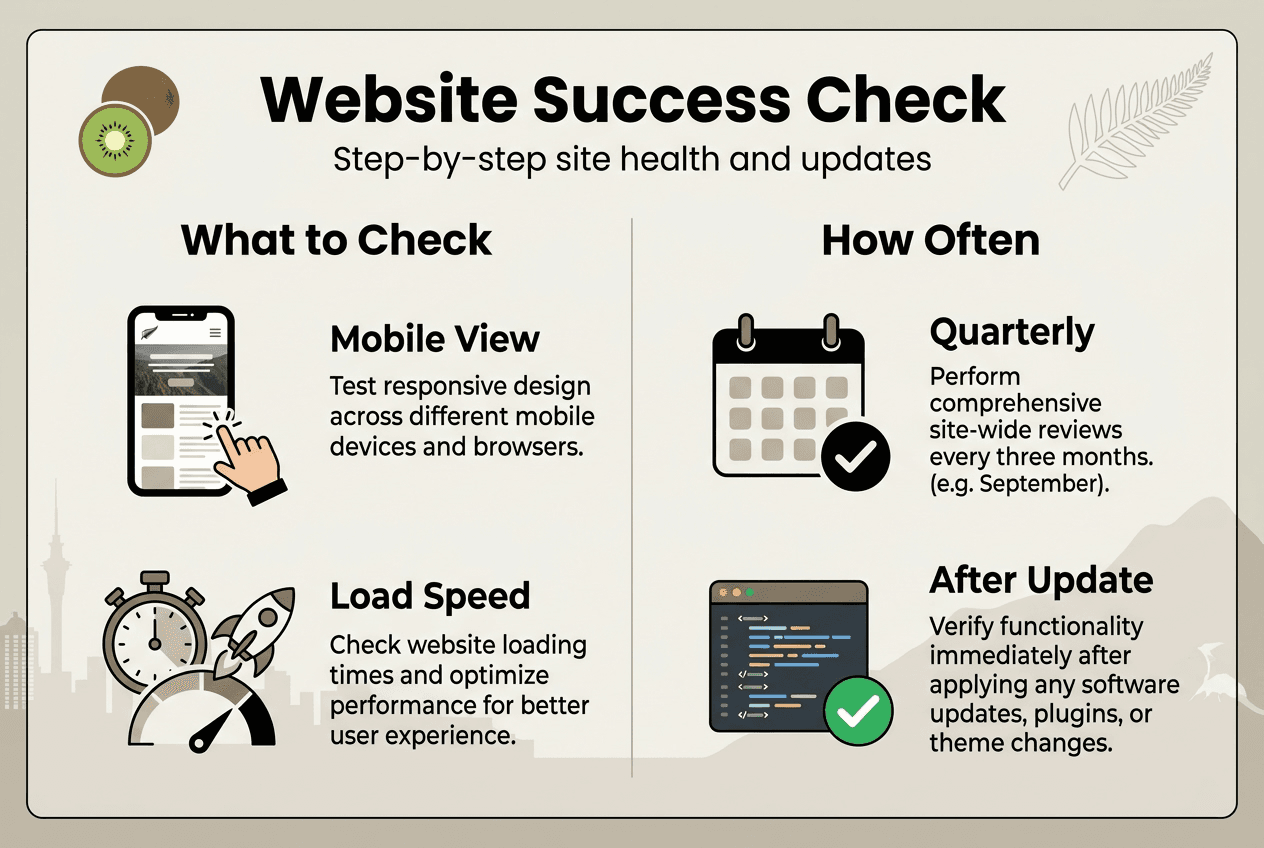
Pro Tip: Set a recurring calendar reminder every three months to review your website. Check for outdated information, broken links, and opportunities to add fresh content. This website features checklist NZ service businesses need helps you stay on track.
Common mistakes to avoid and verifying your website’s success
Even well-intentioned website projects can stumble. Recognising common pitfalls helps you avoid them entirely.
Ignoring mobile users remains the most damaging mistake. Test your site on actual phones, not just by resizing your browser window. Buttons should be easily tappable, text should be readable without zooming, and navigation should work intuitively with one thumb. If your contact form requires excessive scrolling or typing on mobile, you’re losing customers.
Poor navigation confuses visitors and increases bounce rates. Your menu structure should be immediately obvious. Limit top-level menu items to five or six maximum. Use descriptive labels rather than clever wordplay. Visitors should never wonder where to find your contact information or service descriptions.
Missing or buried contact information suggests you don’t actually want customers reaching you. Display your phone number prominently in your header. Include a contact form on multiple pages, not just a dedicated contact page. For service businesses, consider adding a floating call button that stays visible as users scroll.
A strong website builds trust and functionality from the very first visit. Customers expect clarity, speed, and a seamless experience on any device.
Verifying your website’s success requires regular testing. Use free tools to check loading speeds and identify performance bottlenecks. Review your analytics monthly to understand which pages attract visitors and where they leave. This data reveals opportunities for improvement.
Functionality testing should happen across different devices and browsers. What works perfectly on your laptop might break on an older iPad or Android phone. Ask colleagues or customers to test your site and report any issues. Fresh eyes catch problems you’ve become blind to through familiarity.
Content freshness matters for both search rankings and customer trust. An outdated blog or news section suggests your business might be inactive. Either commit to regular updates or remove date stamps from content that remains evergreen. Nothing undermines credibility faster than a “Latest News” section from 2023.
Pro Tip: Set up free monitoring tools that alert you if your website goes down or experiences technical issues. Many hosting providers include uptime monitoring, but third-party services offer additional peace of mind. You can’t fix problems you don’t know exist.
Successful New Zealand business owners like those featured in our website case studies understand that websites require ongoing attention, not just initial effort. Regular maintenance, content updates, and performance monitoring separate effective websites from digital brochures that gather dust.
Build your professional website with expert help
While building your own website teaches valuable skills, partnering with experienced professionals saves time and avoids costly mistakes. You excel at your trade or service, so why not let web experts handle what they do best?
Virtual Innovation specialises in creating websites specifically for New Zealand small businesses, tradies, and service providers. Their team understands the unique challenges you face and builds sites optimised for local customers. Whether you need a straightforward WordPress website design showcasing your services or a full e-commerce solution using Shopify websites, they deliver results that actually generate leads.

Working with a local Auckland agency means you get support during your working hours, face-to-face meetings when needed, and websites built with New Zealand customers in mind. Their web design Auckland services focus on creating sites that convert visitors into paying customers, not just pretty designs that win awards. They handle the technical complexity while you focus on running your business.
Frequently asked questions
Why is choosing a NZ-based website builder important?
New Zealand-based builders offer NZ dollar pricing without currency conversion fees, support during your business hours, and hosting infrastructure optimised for local internet connections. Your website loads faster for Kiwi customers, and you can speak with support staff who understand local business needs. These practical advantages outweigh international platforms’ broader feature sets for most small businesses.
How can I ensure my website ranks well locally in New Zealand?
Include specific location references throughout your content naturally, claim and optimise your Google Business Profile, and ensure your contact page displays your physical address clearly. Use local keywords in page titles and descriptions, build links from other New Zealand websites, and create content addressing local customer concerns. Consistent business information across all online directories also strengthens local search visibility.
What are essential website features for NZ trades and service providers?
You need clear service descriptions, prominent contact information including clickable phone numbers, photo galleries showcasing completed work, and customer testimonials building trust. A simple booking or quote request form reduces friction for potential customers. Mobile responsiveness is non-negotiable since most visitors will find you on their phones. Include your service areas explicitly so customers know whether you cover their location.
How often should I update my business website to keep it effective?
Aim for meaningful updates quarterly at minimum. Add new project photos, refresh service descriptions to reflect current offerings, and update any seasonal information. If you maintain a blog or news section, monthly posts work well for active businesses. The key is consistency rather than frequency. Sporadic bursts of activity followed by months of silence look worse than steady, modest updates.
Can I build a website myself or should I hire a local expert?
You can absolutely build a functional website yourself using modern platforms designed for non-technical users. This approach works well if you have time to learn, enjoy the process, and need a straightforward site. Hire professionals when you need custom functionality, lack time for the learning curve, or want guaranteed results quickly. Many businesses start with DIY sites then upgrade to professional designs as they grow. Both paths work depending on your situation, budget, and timeline.
What’s the biggest mistake NZ small business owners make with their websites?
Treating websites as set-and-forget projects rather than ongoing marketing tools. Your website needs regular attention to remain effective. Outdated content, broken links, and neglected performance issues gradually erode trust and search rankings. Successful business owners schedule regular website reviews and updates just like they maintain their vehicles or equipment. The initial build matters, but consistent maintenance determines long-term success.