
Why website speed matters: boost conversions and trust
Discover why website speed matters for NZ small businesses. Learn how faster load times boost conversions, build trust, and improve your Google r...

You’ve probably noticed how frustrating it is when a website looks perfect on your laptop but turns into a jumbled mess on your phone. Nearly 60% of web traffic comes from mobile devices, yet many small business websites in New Zealand still aren’t optimised for smartphones and tablets. Responsive web design solves this problem by creating websites that adapt seamlessly to any screen size, improving customer satisfaction and boosting your online presence. This guide explains what responsive web design is, how it works, and why it’s essential for your business success.
| Point | Details |
|---|---|
| Responsive design basics | Responsive websites automatically adjust their layout and images to fit any screen size using flexible grids, scalable images and CSS media queries. |
| Mobile friendly ranking | In New Zealand, mobile friendly sites improve visibility because Google prioritises mobile friendly pages in search results. |
| Cost efficient maintenance | One responsive site reduces build and maintenance costs compared with separate desktop and mobile versions. |
| Test on real devices | Always test on real smartphones and tablets to catch touch and performance issues that simulators miss. |
Responsive web design creates websites that automatically adjust their layout, images, and content to fit whatever screen size someone’s using. Whether your customer visits on a smartphone during their lunch break, a tablet while relaxing at home, or a desktop computer at work, responsive web design uses CSS media queries to adapt the website layout to various screen sizes. This approach relies on three core technologies working together seamlessly.
Flexible grids form the foundation by using relative units like percentages instead of fixed pixels. Your website’s columns and sections resize proportionally, maintaining proper spacing and alignment across different devices. Flexible images scale within their containers, preventing awkward cropping or images that extend beyond screen edges. CSS media queries act as the brain of the operation, detecting screen width and applying appropriate styles for optimal display.
This differs fundamentally from older approaches like separate mobile sites. Instead of building two websites and maintaining duplicate content, you create one adaptable site that serves all visitors. Professional services web design incorporates these principles from the ground up, ensuring surgeons, tradespeople, and other service providers deliver professional experiences regardless of how customers access their sites.
Pro Tip: Test your responsive design on actual devices, not just browser resize tools. Real smartphones and tablets reveal touch interaction issues and performance problems that desktop testing misses.
The beauty of responsive design lies in its fluid nature. When someone rotates their phone from portrait to landscape, the layout adjusts instantly. Menu items might stack vertically on narrow screens but spread horizontally on wider displays. Text remains readable without zooming, and buttons stay large enough for easy tapping. Understanding the importance of mobile-friendly sites helps you appreciate why this adaptability matters for keeping customers engaged and preventing them from abandoning your site in frustration.
Small business owners in New Zealand gain significant competitive advantages by embracing responsive web design. Your customers increasingly browse and shop on mobile devices, and a website that works flawlessly across all platforms keeps them engaged longer. Better user experience translates directly into higher conversion rates, whether you’re booking appointments, selling products, or generating enquiry forms.

Google’s search algorithm prioritises mobile-friendly websites, meaning responsive design directly impacts your visibility. When potential customers search for services in Auckland or Wellington, responsive sites rank higher than those offering poor mobile experiences. This SEO advantage brings more organic traffic without increasing your advertising spend.
Cost efficiency represents another crucial benefit. Building and maintaining one responsive website costs substantially less than managing separate desktop and mobile versions. Updates happen once and apply everywhere, reducing ongoing maintenance expenses. For service businesses, this streamlined approach means more resources available for actual business growth rather than website upkeep.
“Responsive design isn’t just about looking good on phones. It’s about meeting customers wherever they are and making it effortless for them to work with you.”
The rising mobile usage trend in New Zealand makes responsive design non-negotiable. Kiwis check their phones constantly throughout the day, researching services, comparing options, and making purchasing decisions. Your competitors who’ve invested in responsive design capture these mobile users while outdated websites lose them within seconds. Customer patience for pinching, zooming, and struggling with navigation has evaporated completely.
Consider the practical impact on your business operations. When customers can easily navigate your site on any device, they’re more likely to complete desired actions. Booking forms work smoothly on smartphones. Product catalogues display beautifully on tablets. Contact information remains accessible regardless of screen size. This seamless experience builds trust and encourages repeat visits. Understanding why website redesign is needed for NZ small business growth reveals how responsive design fits into broader digital strategy improvements.
Understanding your options helps you make informed decisions about your website strategy. Three main approaches exist: responsive design, adaptive design, and separate mobile sites. Each has distinct characteristics, costs, and maintenance requirements that affect small business owners differently.
| Approach | How it works | Best for | Maintenance |
|---|---|---|---|
| Responsive design | Fluid grids adapt continuously | Most small businesses | Single codebase, easy updates |
| Adaptive design | Fixed layouts for specific breakpoints | Complex sites needing device-specific features | Moderate complexity |
| Separate mobile site | Distinct website for mobile users | Legacy systems transitioning slowly | Double maintenance, higher costs |
Responsive web design uses fluid grids that adjust smoothly as screen size changes. Your content reflows naturally, maintaining readability and usability across the entire spectrum from tiny smartphones to massive desktop monitors. Responsive design offers better SEO and easier maintenance than separate mobile sites because search engines index one URL instead of splitting authority between multiple versions.
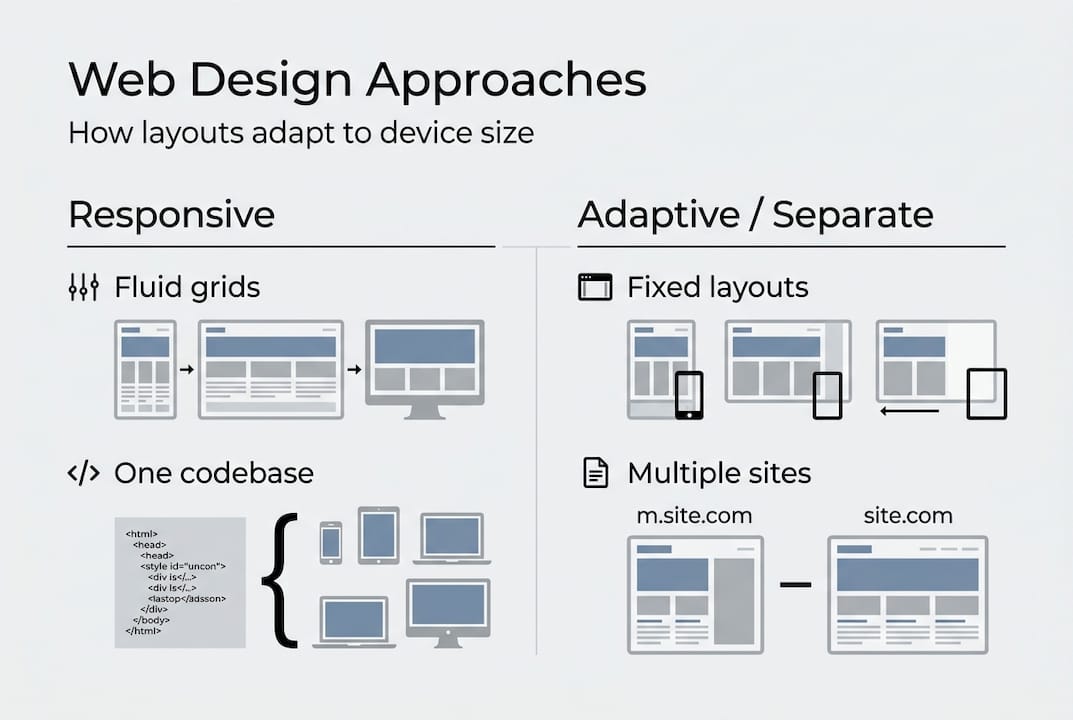
Adaptive design takes a different approach by creating fixed layouts for specific screen sizes. Your website detects the device and serves a predetermined layout optimised for that particular breakpoint. While this allows more control over device-specific experiences, it requires more development work upfront and can feel less smooth during transitions between breakpoints.
Separate mobile sites, often identified by an “m.” subdomain, maintain completely different codebases for mobile and desktop users. This approach was popular years ago but creates significant ongoing challenges. Every content update requires duplicate effort. SEO becomes complicated as search engines must understand which version to show users. Costs multiply because you’re essentially maintaining two websites instead of one.
Pro Tip: Responsive design simplifies your workflow dramatically. When you update content, add new services, or refresh imagery, changes appear instantly across all devices without additional work.
For most New Zealand small businesses, responsive design represents the optimal choice. It balances cost effectiveness with excellent user experience while future-proofing your investment. As new devices with different screen sizes emerge, your responsive site adapts automatically. Web design solutions in Auckland typically recommend responsive approaches for this flexibility and long-term value, especially for service providers who need reliable, maintainable online presences without excessive technical overhead.
Transitioning to responsive web design requires thoughtful planning and execution. Following a structured approach ensures you avoid common pitfalls while maximising the return on your investment. These steps guide you from initial assessment through successful launch and ongoing optimisation.
Audit your current website’s mobile performance using Google’s Mobile-Friendly Test tool. Identify specific issues like tiny text, clickable elements too close together, or content wider than the screen. Document what works and what frustrates users.
Research web designers experienced in responsive design for New Zealand businesses. Look for portfolios showcasing mobile-first approaches and client testimonials from service providers similar to your business. Ask candidates how they handle testing across different devices.
Adopt mobile-first design principles from the start. Begin by designing for smartphones, then progressively enhance the experience for larger screens. This ensures core functionality works perfectly on the most constrained devices before adding desktop-specific features.
Plan your content hierarchy carefully. Determine what information matters most to mobile users and prioritise it prominently. Navigation menus, contact details, and key services should remain easily accessible regardless of screen size.
Implement flexible layouts using relative units and CSS media queries. Your WordPress website design should incorporate responsive frameworks that handle the technical complexity while allowing customisation for your brand.
Optimise images for multiple screen sizes and resolutions. Use responsive image techniques that serve appropriately sized files to different devices, improving load times without sacrificing visual quality on high-resolution displays.
Test extensively across real devices before launch. Borrow smartphones and tablets from friends, family, and colleagues. Check your site on different browsers and operating systems. Pay attention to touch interactions, form submissions, and page load speeds.
Monitor analytics after launch to identify any remaining issues. Track bounce rates, time on site, and conversion rates across device categories. User behaviour reveals problems that testing might have missed.
Pro Tip: Early and frequent testing on actual devices prevents costly redesigns later. Desktop browser tools simulate mobile views but miss crucial details like touch target sizes, scroll behaviour, and real-world performance on cellular networks.
Maintaining your responsive site requires ongoing attention. Technology evolves, new devices emerge, and user expectations increase continuously. Schedule regular reviews with your WordPress designer to ensure your site remains current. Update content management systems promptly to maintain security and compatibility. Monitor site speed as you add features, keeping mobile performance optimal even as functionality expands.
Transforming your website into a responsive powerhouse requires expertise and local market understanding. Virtual Innovation specialises in creating responsive WordPress website design solutions tailored specifically for New Zealand small businesses like yours. We understand the unique challenges service providers face and build sites that work seamlessly across all devices while reflecting your brand professionally.
Our team of experienced WordPress designers in New Zealand brings deep technical knowledge combined with practical business sense. We don’t just build beautiful websites, we create tools that help you work more efficiently and attract more customers. Whether you’re a surgeon needing appointment bookings or a tradesperson showcasing your portfolio, we’ll craft a responsive solution that fits your specific needs. Explore our Auckland web design services to see how we’ve helped other Kiwi businesses succeed online with responsive design that actually delivers results.
A responsive website uses flexible grids, scalable images, and CSS media queries to automatically adjust its layout based on the visitor’s screen size. The content reflows and resizes smoothly whether someone views it on a smartphone, tablet, or desktop computer. This creates a consistent, user-friendly experience across all devices without requiring separate mobile versions.
Costs vary based on complexity, features, and customisation requirements, but responsive design typically ranges from a few thousand dollars for basic sites to higher amounts for complex solutions. The investment pays off through lower maintenance costs compared to managing separate mobile sites, better search rankings, and improved conversion rates. Most New Zealand web design agencies offer packages suited to different business sizes and budgets.
Yes, Google prioritises mobile-friendly websites in search results, and responsive design is Google’s recommended approach. Sites that provide excellent mobile experiences rank higher than those with poor mobile usability. Combined with quality content and proper SEO practices, responsive design gives you a significant advantage in local New Zealand search results where potential customers are looking for services like yours.
Most websites can be converted to responsive design, though the complexity depends on your current platform and code quality. Sometimes a complete rebuild proves more cost-effective than retrofitting responsiveness into outdated code. A professional assessment identifies the best path forward, balancing your budget with long-term goals. Modern platforms like WordPress make responsive conversions relatively straightforward with the right expertise.
Timeline depends on project scope, but typical small business responsive websites take four to eight weeks from initial planning through launch. This includes design mockups, development, content creation, testing across devices, and revisions based on feedback. Rushing the process often leads to problems, so allowing adequate time for thorough testing ensures your site works flawlessly when customers visit.