
Understand what customers need.
Bring together useful purchase and enquiry information. Spot patterns that can help you improve products, service and follow-up.
Your business knows a lot about its customers. Let’s put that knowledge to work, making things faster, better and easier for them and for you.
Auckland based. Personal advice. Practical help.
From an online order to an event booking or a conversation with your team, your data can help you make the next experience better. Here are a few places we can look together.
Bring together useful purchase and enquiry information. Spot patterns that can help you improve products, service and follow-up.
Use booking details, preferences and feedback to help people get the right information before an event and a useful follow-up afterwards.
Give the next person the details they need. Find the gaps that leave customers waiting or repeating themselves.
Turn scattered reports into a view of the questions that matter. Understand what is happening and agree the next action.
Connect campaign activity with enquiries and customer outcomes. Use appropriate customer information to shape better messages and follow-up.
Explore feedback, summarise information or help your team find answers. Start with reliable data and keep important decisions with people.
One-to-one conversations with a team who learns your business. We explain the options, build the agreed changes and help you use them.
Showing outcome 1 / 7
Your customer history. Your team's know-how. The details behind your orders, events and everyday work.
That information may be spread across your website, inbox, spreadsheets and business software. It can be hard to see the whole picture, let alone use it while helping a customer.
We help bring the useful parts together. That could mean a clearer dashboard, a more relevant follow-up or a workflow that gives your team the answer while the customer is still on the phone.
You tell us what a better experience looks like. We help work out how your data can support it.
The right solution depends on your business. These are examples of what we can explore with you.
Use purchase history, preferences or event feedback to make the next message or interaction relevant. Help customers find what they need without asking them the same questions again.
Connect enquiries, sales and advertising information. Separate a click from a useful enquiry, see where follow-up is getting stuck and make better-informed decisions about the next spend.
Bring the details into the place people do their work. Reduce repeated entry, give each task a clear owner and help your team act while the information is still useful.
Useful information connected to the people and decisions it supports.
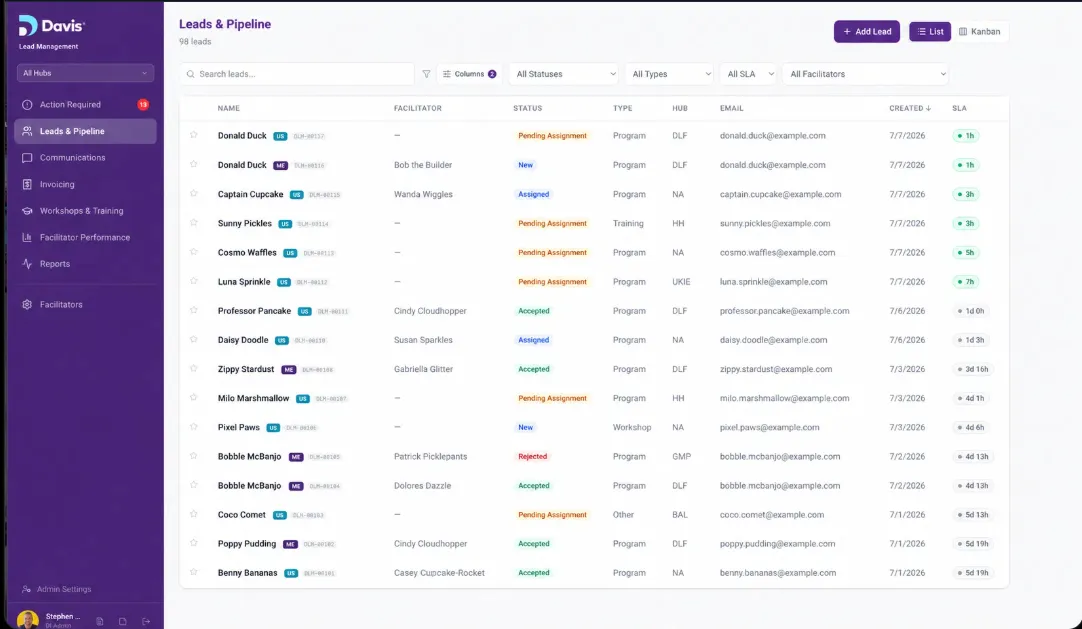
We built a lead-management system to help Davis review and distribute enquiries across its facilitator network. Region, programme and ownership help the team decide who should follow up, with the history kept together.
Demonstration data shown.
Read the Davis story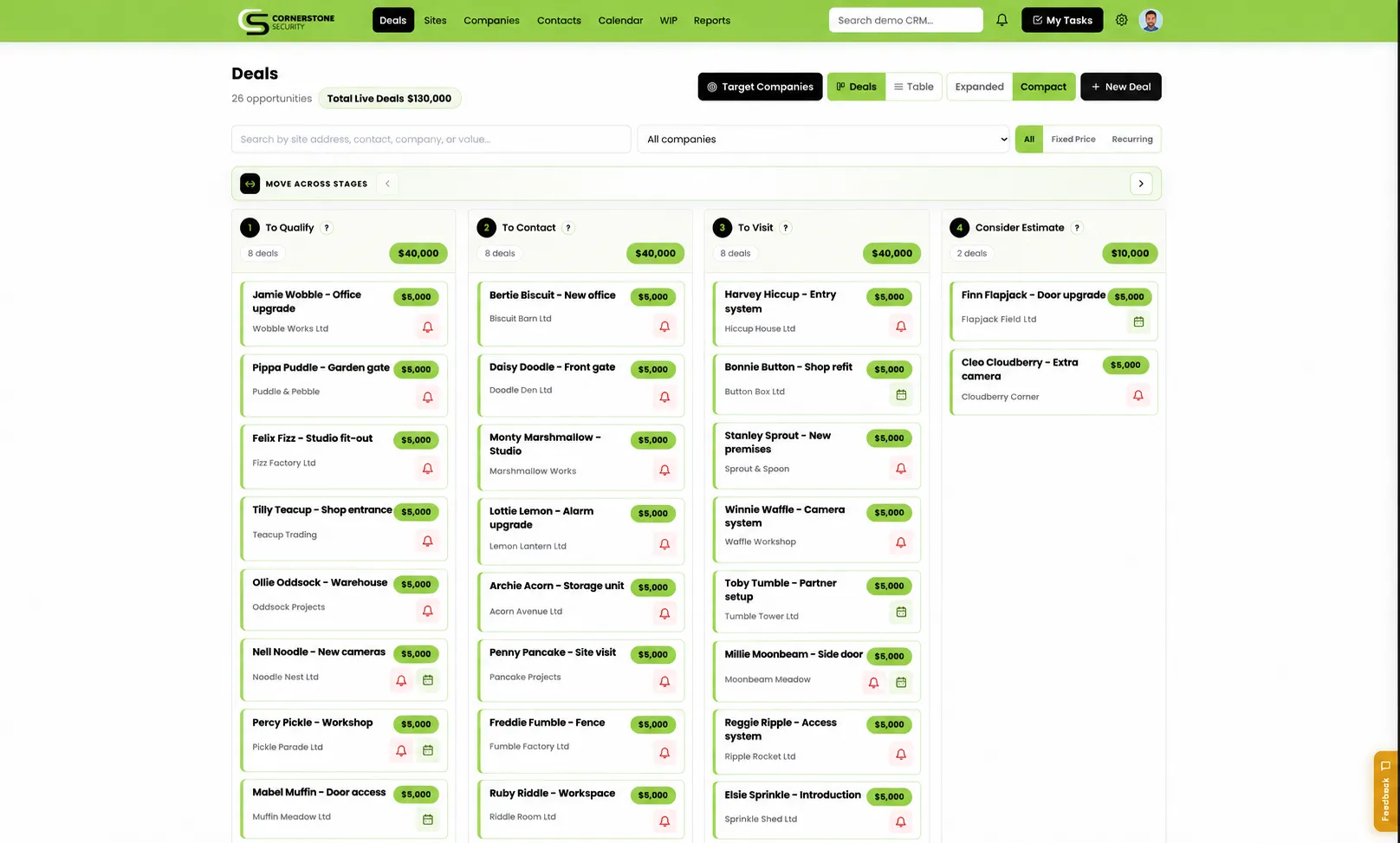
A custom CRM connected to Fergus brings sales stages, follow-ups and forward work into a clearer view. An office dashboard updates from the CRM, giving the team information they can use in their day.
Demonstration data shown.
Read the Cornerstone storyOne-to-one help, shaped around what you want to achieve. We can start with one improvement or look at your data as part of an ongoing innovation partnership.
Meet your innovation teamWhat should be faster, better or easier? We talk with you and the people doing the work to find a useful place to start.
We check where the information lives, how reliable it is and who can use it. Then we agree one improvement and how to measure it.
We connect, organise or build what is needed, try it with your team and review the result together. The next step comes from what we learn.
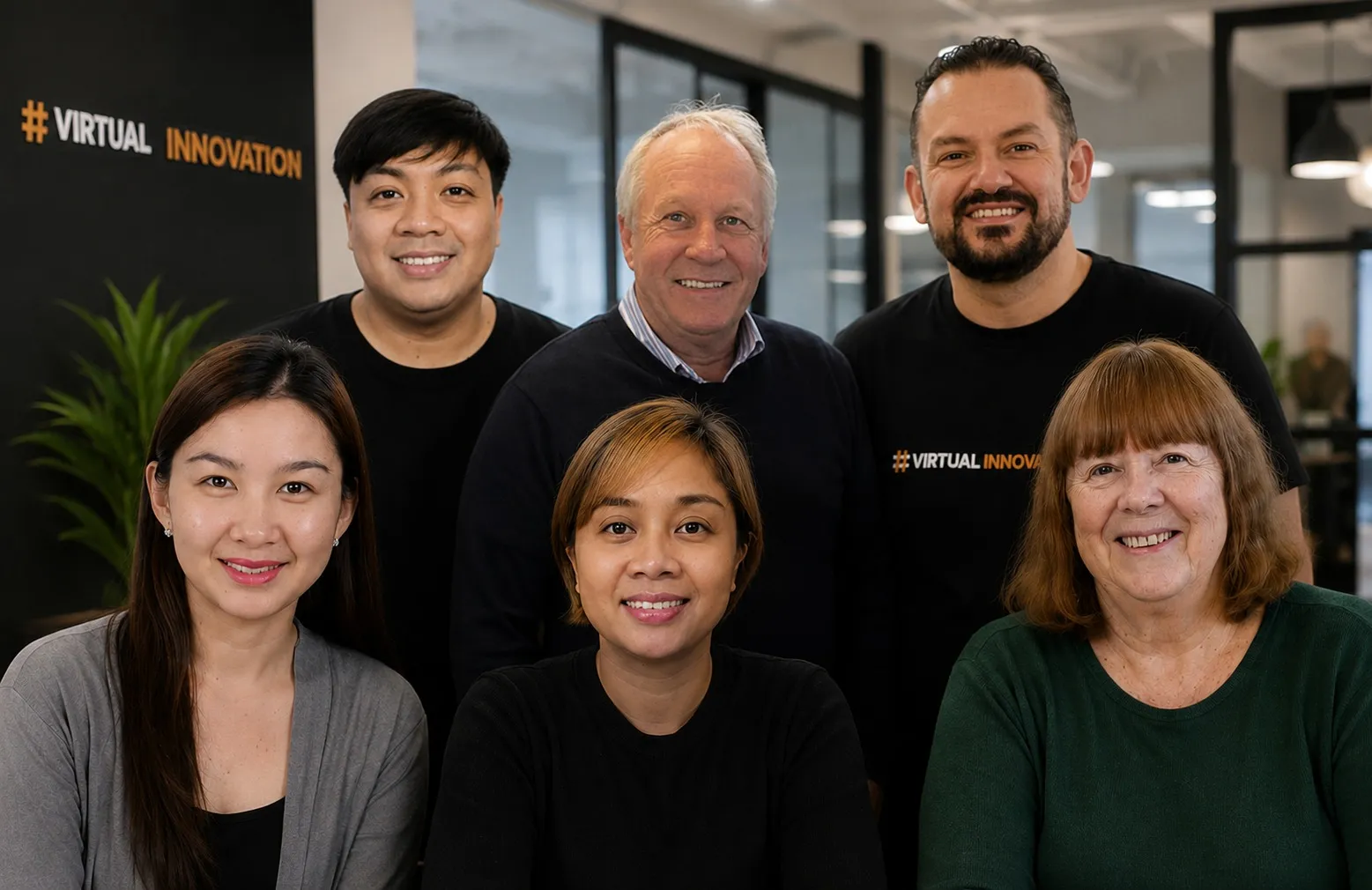
We’re Auckland based, with team members internationally, working with businesses across New Zealand. You don’t need to know the technical stuff. That’s what we’re here for.
Meet Virtual InnovationMaking better use of information your business already holds. That might mean connecting systems, cleaning up records, creating a useful report or changing a customer workflow. We start with the result you want and work out what will help.
No. A small business might need help joining up orders and customer enquiries. A larger organisation might need a clearer view across teams or locations. We work one-to-one with you and scope the work around the opportunity.
Often, yes. We look at the tools, exports and connections available, including systems such as Shopify, Xero, Google Workspace and existing business software. We check access and practical limits before recommending a solution.
Only where it helps. Straightforward rules and good reporting solve plenty of problems. AI can be useful for interpreting feedback, preparing summaries or finding information, with checks appropriate to the work.
We start by understanding its quality, purpose and who should have access. We agree what can be used and shared before connecting tools or applying AI. We can work with sample information while exploring the first idea.
We agree a starting point and a useful measure before the work begins. That could be response time, repeated admin, completed follow-ups or a customer experience measure. Then we review what changed, including any limits in the data.
No match yet. Try another word, or ask us when we chat.
Bring a question, a frustrating process or an idea.
We’ll talk through it together, in plain English.